
Leonid Meteor Shower 2026: When to Watch, Where to Look, and What to Expect on the Peak Night of November 17–18

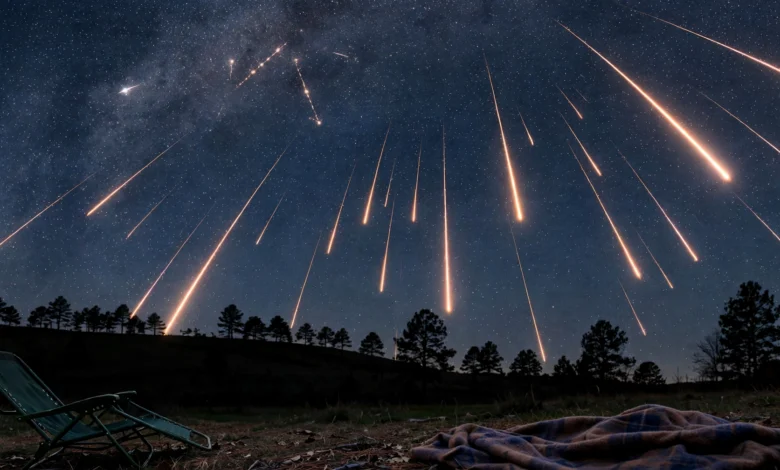
Leonid Meteor Shower 2026: When to Watch, Where to Look, and What to Expect on the Peak Night of November 17–18
The Leonid meteor shower reaches its peak on the night of Tuesday, November 17, into the early hours of Wednesday, November 18, 2026, giving skywatchers across the United States two mornings to catch one of the year’s fastest meteor displays. The best viewing comes after midnight, once the constellation Leo climbs into the eastern sky and the Moon has set, leaving the hours before dawn dark.
Forecasters do not agree to the hour. NASA lists the peak night as November 16–17, while the International Meteor Organization puts the maximum at about 11:45 p.m. UTC on November 17, and NASA’s Leonids guide recommends the early mornings of both November 17 and 18. The practical advice is the same either way: if the sky is clear, watch after midnight on both mornings, with the night of the 17th into the 18th as the main event.
Leonid meteor shower 2026 at a glance
| Detail | What to know |
|---|---|
| Peak night | Tuesday, November 17 into Wednesday, November 18, 2026 |
| Also worth watching | Early morning of Tuesday, November 17 |
| Best hours | Midnight to about 5:30 a.m. local time |
| How many meteors | Up to 10–15 an hour under truly dark skies; fewer from towns and suburbs |
| Active dates | November 6–30, 2026 |
| Moon | First quarter on November 17, sets around midnight |
| Where to look | High in the southeast, away from the constellation Leo |
| Equipment needed | None — your eyes only |
A modest year for a famously dramatic shower
Set expectations before you set an alarm. Under a truly dark sky, forecasts put the rate at up to 10 to 15 meteors an hour at the peak, which works out to roughly one every four to six minutes. NASA’s own Leonids page is more cautious, noting that in an ordinary year the count is often as low as about three an hour. From a suburb, expect a handful at most, and a bright one every now and then.
What the Leonids lack in numbers this year they make up for in speed and style. They hit the atmosphere at about 44 miles per second, making them some of the fastest meteors of any annual shower, and they are known for bright streaks that leave glowing trains hanging in the sky for seconds at a time. A few larger particles can produce fireballs, meteors bright enough to rival the planets.
No meteor storm is expected in 2026. A storm means at least 1,000 meteors an hour, and none of the forecasts points that way. The shower is running on old, spread-out dust this year, not a dense young trail.
Where the Leonids come from
Every Leonid is a speck of dust shed by comet 55P/Tempel-Tuttle, a small comet with a nucleus only about 2.24 miles (3.6 kilometres) across. It circles the Sun once every 33 years, last passed closest to the Sun in February 1998, and is not due back until around May 2031.
Each November, Earth ploughs through the dusty trail the comet left behind. The particles, most smaller than a grain of sand, burn up about 60 miles overhead. They appear to stream out of the constellation Leo, from a curve of stars called the Sickle, near the bright star Regulus. That radiant point is why they are called the Leonids.
November has already delivered for American skywatchers: SpaceX caught its Starship spacecraft in the launch tower’s arms on Saturday after a 22-hour flight, and the same flight had reached Earth orbit on Friday. The Leonids are the quieter half of the week’s sky show, and the one anyone can watch for free.
The night the stars fell: the Leonids’ stormy past
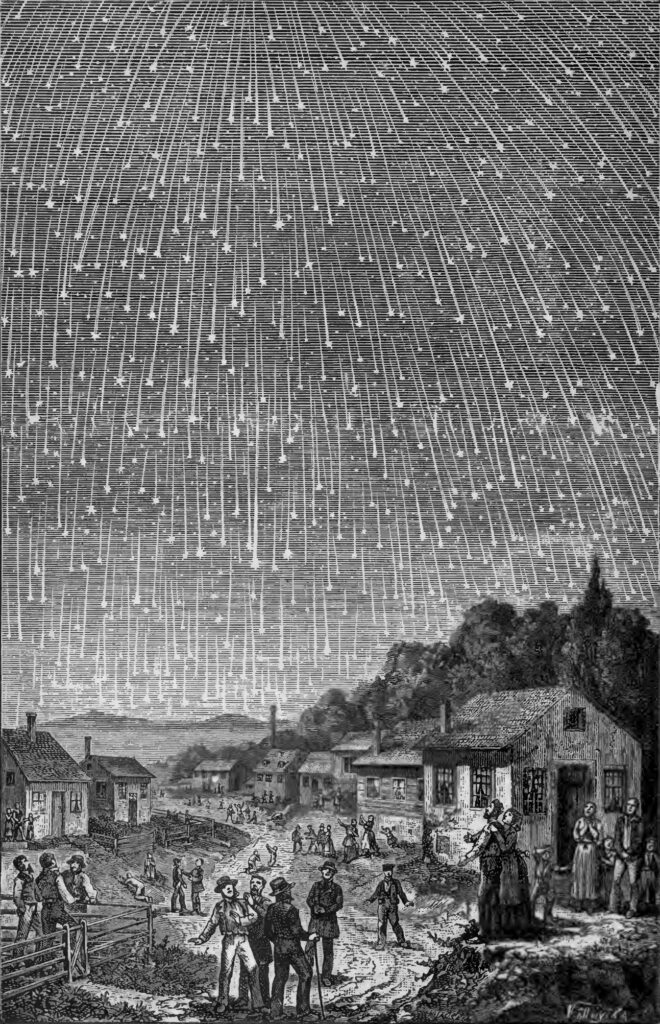
The Leonids earned their reputation in a single night. On November 12–13, 1833, meteors fell over eastern North America at rates witnesses described as more than 100,000 an hour, an event remembered as “the night the stars fell.” It was so widely observed that it launched the modern scientific study of meteors.
How to watch the Leonids this week
Watching a meteor shower takes almost no equipment and a little patience. The Farmers’ Almanac’s Leonid guide puts the prime window from midnight to about 5:30 a.m. local time, when Leo rides high in the southeast and Earth is ploughing head-on into the dust stream.
Drive 20 to 40 minutes outside the nearest city if you can, since the fewer streetlights, the more meteors you will see. Check the local forecast the day before and have a backup spot ready, because clouds are the single biggest enemy of meteor watching. Mid-November overnight temperatures dip into the 20s and 30s across much of the United States, so dress in layers with a hat and gloves.
Lie flat on a reclining chair or a blanket and give your eyes 20 to 30 minutes to adjust to the dark. Do not fix on one star; scan a wide stretch of sky, and look away from Leo itself, since meteors appear longer and more spectacular away from the radiant. No telescope or binoculars will help — meteors cross too much sky too fast. Put your phone away or switch it to red light, since white light wrecks night vision in seconds.
One more tip for the night: not every meteor you see will be a Leonid. The Northern Taurids, which peaked on November 11–12, and the Southern Taurids are still active in the background at about five meteors an hour. They are slow and bright, famous for fireballs, so a slow, bright meteor that does not trace back to Leo is probably a Taurid.
Leonid meteor shower 2026: questions answered
When is the Leonid meteor shower peak in 2026?
The peak falls on the night of Tuesday, November 17, into the early hours of Wednesday, November 18, 2026. NASA lists the peak night as November 16–17, so the early morning of November 17 is also worth watching.
How many meteors will I see?
Under a truly dark sky, up to 10 to 15 an hour at the peak, though NASA notes ordinary years often run as low as about three an hour. From a town or suburb, expect fewer. Patience matters more than location luck on a quiet year like this one.
Do I need a telescope to watch the Leonids?
No. Meteors move too fast and cover too much sky for a telescope or binoculars. Your naked eye, a dark site and 20 to 30 minutes for your eyes to adjust are all you need.
Will there be a Leonid meteor storm in 2026?
No. No forecaster expects storm-level activity this year. The next chance of a major outburst is around 2033–2034, when Earth crosses older dust trails from comet Tempel-Tuttle.
What time is best to watch from the United States?
After midnight local time until dawn, ideally in the last two hours before sunrise. The first-quarter Moon sets around midnight on both peak nights, so the prime hours are dark.






One Comment