Trump, Xi and Putin to Meet in Shenzhen on Thursday in First Three-Way Summit on Nuclear Arms

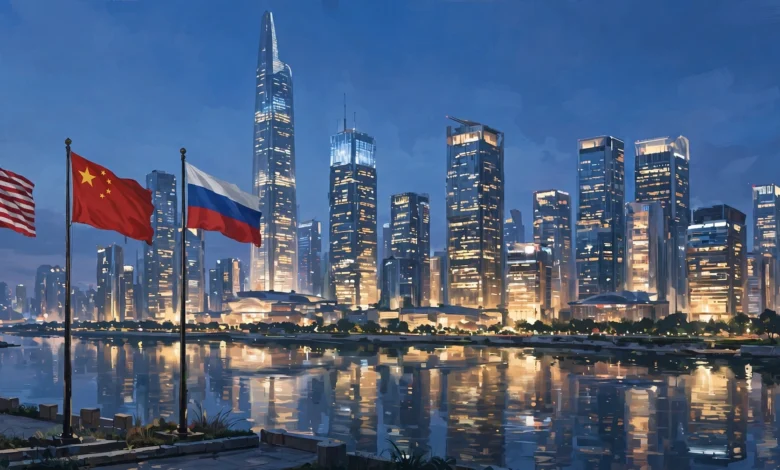
US President Donald Trump will meet Chinese President Xi Jinping and Russian President Vladimir Putin in Shenzhen on Thursday, 19 November, for the first three-way summit of the leaders of the United States, China and Russia, the White House announced on Friday. The meeting will take place on the sidelines of the Asia-Pacific Economic Cooperation summit, with nuclear arms reduction at the top of the agenda.
Trump is expected to raise the reduction of nuclear arsenals with the leaders of the world’s two other largest nuclear powers, and US officials say the war in Iran is also likely to come up. The three-way talks will close Trump’s visit to China, capping a week that begins with an ASEAN summit in the Philippines.
What the White House has confirmed
White House spokesperson Olivia Wales told reporters on Friday that Trump would “discuss the reduction of nuclear weapons in the world, whose proliferation President Trump believes is very dangerous.” She confirmed the meeting would take place on Thursday in China, and the Kremlin later said the talks will be held on 19 November.
Trump leaves Washington on Monday and arrives in the Philippines on Tuesday for the Association of Southeast Asian Nations summit before travelling to Shenzhen. On Thursday he will also hold a bilateral meeting and a working lunch with Xi, their fourth meeting since Trump returned to office. Tesla and SpaceX chief Elon Musk will accompany Trump to China but will not take part in the meeting with Xi and Putin, officials said.
The gathering is the first three-way meeting of the three countries’ leaders, and it will be held as the APEC Economic Leaders’ Meeting brings together leaders from 21 member economies in Shenzhen on 18 and 19 November, with Xi chairing the summit.
Nuclear arsenals at the centre of the talks
The three countries hold the world’s largest nuclear arsenals by a wide margin, and the imbalance between them shapes the talks. The United States and Russia each hold more than 5,000 nuclear warheads, while China has around 500, although Beijing is rapidly expanding its arsenal.
| Country | Estimated nuclear warheads |
|---|---|
| United States | More than 5,000 |
| Russia | More than 5,000 |
| China | Around 500 |
The figures were reported by Reuters. The last nuclear arms treaty between Washington and Moscow, New START, expired earlier this year, leaving no formal limits in place between the two largest arsenals.
Expectations for a deal are low. A senior Trump administration official said “we do not expect to get to any kind of agreement” on nuclear issues, but added that “it’s time for China to sort of step up” and talk about the topic. Negotiations over the meeting had not yet produced an agreed agenda or format as of Saturday, according to two people familiar with the planning.
Ukraine off the agenda — but Moscow disagrees
Trump is not expected to raise Russia’s war in Ukraine at the three-way meeting, US officials said, because China is not part of the separate US–Russia negotiating track on the conflict. The Kremlin, however, says Putin intends to speak to Trump in Shenzhen about efforts to end the war in Ukraine, and no separate one-on-one meeting between the two presidents is planned.
Putin’s spokesman Dmitry Peskov said on Monday that “suggestions are being exchanged regarding a possible agenda” and that “the meeting will certainly be interesting.” Beijing has resisted putting Ukraine on the agenda, according to a person briefed on the meeting and a European diplomat, and China’s embassy in Washington said only that “China is in communication with relevant parties regarding a meeting between the three heads of state.”
Why some allies fear a “new Yalta”
The proposed meeting has drawn comparisons, particularly in Russia, with the 1945 Yalta Conference, where the United States, Britain and the Soviet Union formalised spheres of influence at the end of the Second World War. Yalta became shorthand for great-power deals imposed on smaller countries, and the comparison has unsettled governments that will not be in the room, including Ukraine and Taiwan.
Ukrainian President Volodymyr Zelenskiy said last month: “We really don’t want this to turn into ‘Yalta 2, 3, 4,’ with a redistribution of influence.” For Russian nationalists, the prospect has generated excitement, with ideologue Alexander Dugin calling it “deeply symbolic — it’s a confirmation of a multi-polar world that the West denies.”
The optics are awkward for China, which was not invited to Yalta in 1945 and presents itself as an advocate for smaller countries. Chinese academics interviewed by Reuters described Trump’s suggestion of nuclear talks as a nonstarter for Beijing, which considers itself a nuclear underdog.
What happens next
Trump arrives in China after his party’s losses in the midterm elections, in which Democrats won both chambers of Congress. The Democratic gains extended to statehouses, where the party also flipped governor’s offices, including Alaska’s.
With a Democratic-controlled Congress taking office next year, Trump may be seeking wins abroad, and an agreement on arms or help ending the war with Iran could burnish his legacy. For now, the White House has announced only that Trump will raise nuclear-arms reduction with Xi and Putin — whether the three leaders leave Shenzhen with anything more than a photograph will only become clear on Thursday.
Frequently asked questions
When and where is the Trump–Xi–Putin meeting?
On Thursday, 19 November 2026, in Shenzhen, China, on the sidelines of the APEC Economic Leaders’ Meeting, which runs on 18 and 19 November.
What will the three leaders discuss?
Nuclear arms reduction is the main topic, according to the White House, and US officials say the war in Iran is also expected to come up.
Is Ukraine on the agenda?
US officials say Trump is not expected to raise the war in Ukraine at the three-way meeting. The Kremlin says Putin intends to raise it with Trump, but no separate one-on-one meeting is planned.
Why is the meeting being compared to Yalta?
The 1945 Yalta Conference saw the US, Britain and the Soviet Union divide spheres of influence after the Second World War. Critics fear a similar great-power deal made without the smaller countries affected, while supporters in Moscow welcome the comparison.
What are the chances of a nuclear arms deal?
Slim, by the White House’s own account. A senior US official said no agreement is expected, describing the meeting as an opening discussion — and China, with around 500 warheads against more than 5,000 each for the US and Russia, has shown little appetite for three-way arms limits.