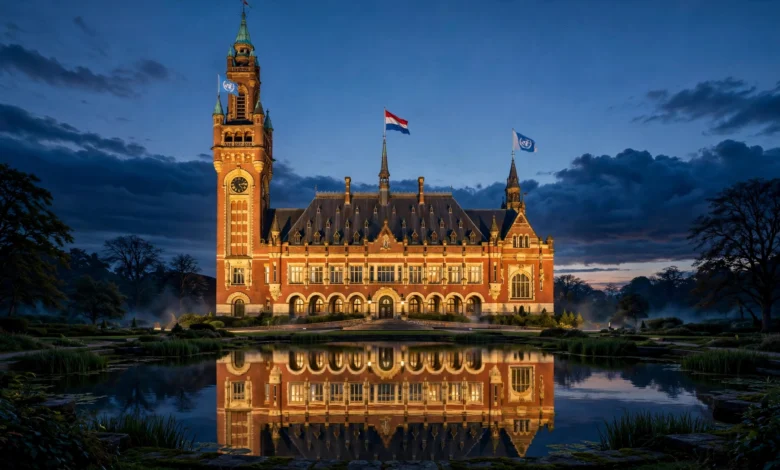
The International Court of Justice ruled on Thursday, 19 November 2026, that Myanmar committed genocide against the Rohingya Muslim minority during its 2017 military crackdown in northern Rakhine State, delivering the verdict at the Peace Palace in The Hague in the first ruling of its kind in the court’s 80-year history.
Court President Yuji Iwasawa read the judgment over about three hours, finding by a 9-6 vote that Myanmar’s security forces killed about 10,000 Rohingya civilians, carried out widespread sexual violence and attacked families as they fled in large numbers to Bangladesh. The decision makes Myanmar the first state ever held responsible for genocide by the United Nations’ highest court.
A 9-6 Verdict After Seven Years in Court
The case was brought by The Gambia, a small West African nation that filed its claim on 11 November 2019 under the 1948 Genocide Convention, accusing Myanmar of seeking to destroy the Rohingya people. The court heard final arguments over three weeks in January 2026 before delivering 13 operative rulings on Thursday.
Iwasawa said the evidence left the judges with one conclusion. “The court finds that Myanmar’s security forces killed thousands of Rohingya civilians, perpetrated widespread acts of sexual violence as well as acts of extreme violence against children and attacked fleeing Rohingya as they sought to flee in large numbers to Bangladesh,” he said.
The court said the “only reasonable inference” from the evidence was that Myanmar’s forces acted with the intent to destroy a substantial part of the Rohingya group. It also found that Myanmar violated its obligation to prevent genocide, ruling that the government should have known there was a risk of genocide when armed civilians took part in the military campaign.
Myanmar had argued that its crackdown was a legitimate response to attacks on police posts by fighters from the Arakan Rohingya Salvation Army. The judges rejected that account as the explanation for what happened in Rakhine State.
What the Judges Found in Northern Rakhine
The 2017 campaign drove more than 730,000 Rohingya across the border into Bangladesh in a matter of weeks. More than 1.3 million Rohingya remain displaced across South and Southeast Asia today, including about 1.2 million living in sprawling refugee camps in Cox’s Bazar, according to the United Nations.
The court found that Myanmar’s forces committed mass killings, inflicted serious bodily and mental harm including widespread sexual violence, and imposed measures intended to prevent births within the group. Al Jazeera’s coverage from The Hague noted that the judges also heard evidence that the Rohingya had long been treated as second-class citizens and forced to take part in a birth-control programme.
| Figure | What the court and the UN record |
|---|---|
| Vote on the genocide finding | 9-6 in favour, with six judges dissenting |
| Rohingya civilians killed in 2017 | About 10,000, of roughly 815,000 in northern Rakhine |
| People who fled to Bangladesh | More than 730,000 |
| Rohingya still displaced today | More than 1.3 million, including about 1.2 million in Cox’s Bazar |
| Years the case spent before the court | Seven, from The Gambia’s filing in November 2019 |
Refugees in Cox’s Bazar watched the verdict live on large screens at the camps, where families have waited nearly a decade for any measure of justice. Human rights lawyer Toby Cadman told Al Jazeera that proving the specific intent to destroy a group is “an extremely high bar” and that the court had never before ruled that a state held such intent.
Return, Restitution and Reparations: What the Court Ordered
The judgment does more than assign blame. It orders Myanmar to take concrete steps for the survivors and for the hundreds of thousands still unable to go home.
| What the court ordered | What it means in practice |
|---|---|
| Safe, voluntary and dignified return | Myanmar must allow and facilitate the return of refugees to their homes |
| Restitution of property | Return or replacement of collective property that was damaged or destroyed |
| Search for the disappeared | Help finding missing people and ensuring proper burials for the dead |
| Rehabilitation | Care for the physical and psychological injuries of survivors |
| Protection | Guarantees against further persecution of the Rohingya |
| Accountability | Investigation and punishment of those suspected of genocide |
| Compensation | Reparations, with the amount to be decided in further proceedings |
The court did not set a monetary figure for compensation on Thursday. Further proceedings to determine the amount are expected to take about two years, and The Gambia has been recognised as entitled to seek reparations on behalf of Rohingya victims.
A Binding Ruling With No Police to Enforce It
The judgment is final and cannot be appealed, and under international law it binds Myanmar. The court itself, however, has no police force and no independent way to make a government comply, so what happens next will depend on political pressure.
Amnesty International welcomed the ruling and said it hoped the decision “marks the beginning of a long overdue process of accountability in Myanmar”, adding that all crimes under international law “must be effectively investigated and those suspected of responsibility brought to justice”. Lawyers following the case say the next steps could include taking the matter to the UN Security Council or imposing sanctions.
That enforcement question is where the politics begins. Myanmar is ruled by a military government that has ignored earlier international court orders, and it remains to be seen whether its rulers will follow this one. The ruling lands as world leaders juggle several crises at once, on the same day that Trump, Xi and Putin held a three-way summit in Shenzhen to discuss nuclear arms and trade.
Why the Case Matters Beyond Myanmar
The ruling was the first time in the court’s 80-year history that its judges have determined a state committed genocide. It was also only the fourth time since the Holocaust that an international court has found the legal threshold for genocide met, a measure of how rarely the crime is proved in court.
The decision is likely to shape other cases before the same court. The judges are also hearing South Africa’s genocide case against Israel, and legal analysts say the Myanmar ruling’s reasoning on intent, sexual violence and the destruction of homes will be closely studied by both sides in that case.
There is an American thread in the story as well. United States judge Sarah H. Cleveland sat on the panel and supported all 13 of the court’s operative rulings. In Washington, the verdict arrives as a new Congress takes shape after Democrats won both chambers in the 2026 midterms, a shift that could colour how the United States presses the case at the United Nations.
For the Rohingya themselves, the ruling is a legal landmark, not a homecoming. The camps in Bangladesh remain crowded, humanitarian aid is shrinking, and dangerous sea crossings continue to claim lives. The court’s words are now on the record. Whether they change anything on the ground in Rakhine State is the question the next two years of proceedings, and the world’s response, will have to answer.
Rohingya Genocide Ruling: Your Questions Answered
What did the ICJ rule about Myanmar and the Rohingya?
The court ruled on 19 November 2026, by a 9-6 vote, that Myanmar committed genocide against the Rohingya in northern Rakhine State during its 2017 military crackdown, breaching the 1948 Genocide Convention. It is the first time the court has ever found a state responsible for genocide.
How many Rohingya were killed or forced to flee?
The court found that Myanmar’s forces killed about 10,000 Rohingya civilians in 2017. More than 730,000 fled to Bangladesh, and more than 1.3 million Rohingya remain displaced today, including about 1.2 million in camps in Cox’s Bazar.
Who brought the case against Myanmar?
The Gambia filed the case in November 2019 under the Genocide Convention, which allows any state to bring proceedings against another country it believes has breached the treaty. Eleven other states later intervened in support of the case.
What must Myanmar do now?
The court ordered Myanmar to facilitate the safe, voluntary and dignified return of refugees, restore damaged property, search for the disappeared, provide rehabilitation for survivors, protect the Rohingya from further persecution, investigate and punish those responsible, and pay reparations. The compensation amount will be decided in further proceedings.
Can the ruling be enforced?
The judgment is final and legally binding, but the court has no enforcement mechanism of its own. Compliance will depend on pressure from the United Nations, individual governments and possible sanctions.