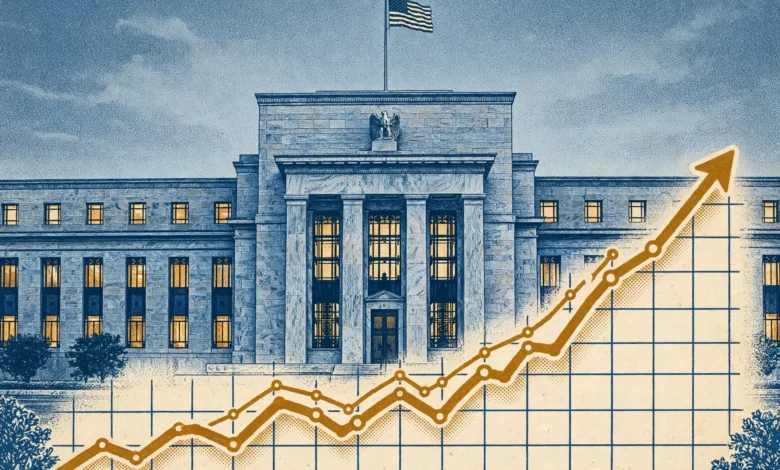
The Federal Reserve held its benchmark interest rate unchanged on Wednesday, 28 October 2026, in Washington, keeping the federal funds target range at 3.75% to 4.00% after a quarter-point increase in September. The decision, taken by a 10-2 vote, pauses the tightening cycle for now while leaving the door open to another move before the year ends.
That pause was widely expected, which made the split inside the committee the real news. Governor Lisa Cook and Cleveland Fed President Beth Hammack both dissented, preferring an immediate quarter-point increase, a divide that puts the December meeting firmly in play.
The vote that was not unanimous
The Federal Reserve’s official statement said the committee decided to maintain the target range in support of its dual mandate, while continuing to maintain ample reserves in the banking system. It named Cook and Hammack as the two voters against the action, both of whom wanted rates raised by a quarter point at this meeting.
Fed Chair Kevin Warsh, speaking after the announcement, described the weeks ahead as information-rich and said he and his colleagues were keen to take notice of what that information showed. The statement itself used similar language, saying the accumulation of more information would help determine the policy stance needed for a timely return of inflation to the committee’s 2% goal.
Why waiting won the argument
The statement upgraded its description of economic activity to a strong pace, from solid in September, citing resilient domestic spending, strong productivity growth and robust capital investment. Job gains have kept pace with the workforce and the unemployment rate has changed little, according to the statement, while inflation remains elevated.
That combination explains the hold. Consumer prices rose 3.7% over the year to September, up from 3.4% in August, so inflation is still well above the Fed’s 2% longer-run target. At the same time, the September increase has had only weeks to work through borrowing costs, and officials said they wanted more evidence before deciding whether a second consecutive hike is needed.
The decision also came six days before the midterm elections on 3 November 2026, in which control of Congress is at stake. The Fed’s stated task is narrower than the campaign debate, however: maximum employment and price stability, with the statement closing on a pledge that the committee will deliver price stability.
What markets did next
Wall Street’s first reaction was modestly positive, with the major indexes edging higher after the announcement and Warsh’s press conference. The CNA report on the decision noted the hold was in line with market expectations, while traders raised their confidence in another quarter-point increase in December, according to CME FedWatch pricing cited in market coverage.
| Index | Move on Wednesday, 28 October | Close |
|---|---|---|
| Dow Jones Industrial Average | Up 97.53 points, or 0.19% | 52,475.10 |
| S&P 500 | Up 21.37 points, or 0.28% | 7,743.97 |
| Nasdaq Composite | Up 72.04 points, or 0.27% | 26,549.85 |
The market reaction sat alongside a busy earnings evening, with Alphabet third-quarter earnings landing after the close on the same day. That pairing, a rate decision and a major technology report on one evening, is why Wednesday was framed in advance as one of the autumn’s busiest days for investors.
What December and 2027 now look like
October was not a meeting that included a Summary of Economic Projections, so there was no new dot plot of officials’ rate projections. That puts extra weight on the next meeting, scheduled for 8 and 9 December, which will be the Fed’s final rate decision of 2026.
Warsh also said the Fed will keep eight meetings a year but dedicate one meeting in 2027, and potentially two in 2028, to broader monetary policy strategy rather than interest-rate decisions. Analysts cited in market coverage read that change as reducing the number of opportunities for future rate moves, which helped temper expectations for hikes over the next year.
For now, the December question is unchanged in form but sharper in tone: two voting officials have already said they wanted a hike in October, and the statement gives no promise about what happens next. Traders will therefore watch incoming inflation and jobs data, rather than any single Fed remark, for the signal that tips the December vote.
What a hold does — and does not — do for borrowers
A hold leaves the Fed’s benchmark where it is, but it does not by itself lower the rates households actually pay. Mortgage, credit-card and business-loan rates respond to Treasury yields, lender pricing and expectations for future Fed moves, not only to a single decision.
That distinction matters after a month in which long-term yields have hovered near 5%, raising borrowing costs even without a further Fed move. A statement that keeps December in play could therefore keep those costs elevated, while a longer pause, if the data support it, could ease some of that pressure over time.
The result also closes the loop on the Fed decision day preview, which had framed Wednesday as a test of both monetary policy and the economics of the AI boom. The test produced a split verdict: a pause from the majority, a call for more tightening from two officials, and a December meeting that is now the next real decision point.



One Comment